


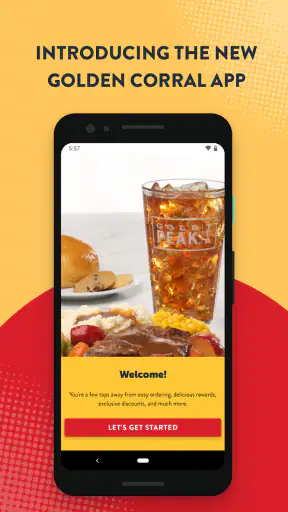
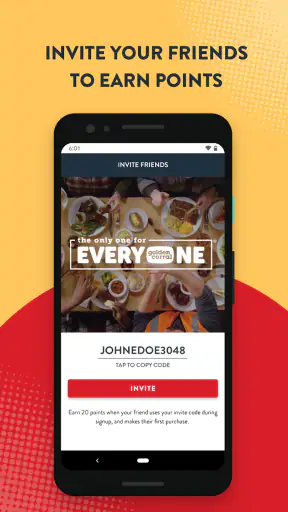
When I want Golden Corral without making a separate trip to the restaurant, I find the Golden Corral app most useful as a straightforward bridge between choosing a meal and arranging how it reaches me. It is a free Food & Drink app from Golden Corral Corporation, built around delivery, pickup, and rewards rather than trying to become a general restaurant guide. That narrow purpose is a strength: the experience feels focused when I already know I want Golden Corral and need a practical way to place an order.
My overall impression is positive, especially for regular customers who prefer handling an order from a phone. The app has a 4.8 average from around 33 thousand ratings, and it has passed the one-million-install mark. Those figures suggest that it has found a clear audience, although popularity does not remove the need to check each order carefully. Restaurant availability, menu choices, and the final ordering experience can depend heavily on the location selected.
How Golden Corral feels to use in real situations
Readable navigation for a focused restaurant task
The most helpful design decision is the app’s limited scope. Instead of asking me to browse many restaurants or compare unrelated services, it keeps attention on the basic choices: whether I want delivery or pickup, what I want to order, and whether I can use the rewards side of the experience. That makes the first few minutes less mentally demanding than using a broad delivery marketplace.
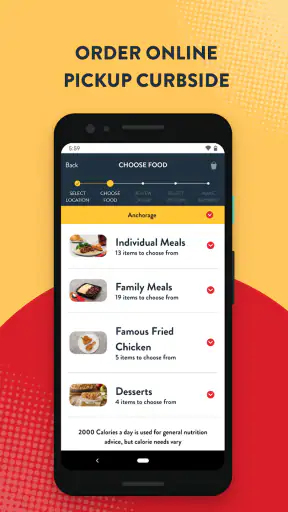
I would describe the navigation as practical rather than feature-heavy. If I am ordering for myself, I can think in a simple sequence: select the restaurant context, review the available food, adjust the order, and choose a fulfillment method. This matters for people who become overwhelmed by crowded interfaces. A smaller decision tree is often more useful than a screen full of promotions, filters, and competing restaurants.
There is also a useful distinction between browsing and committing. I can use the app to see what is available before deciding whether pickup or delivery makes sense. That is valuable when I am planning a family meal and need to consider the total order rather than making a quick individual choice. My advice is to review the cart slowly before submitting it, especially when several people are ordering different items.
For readability, I would use the phone’s own display controls if text or controls feel too small. Increasing system text size can make many mobile apps easier to read, but it can also cause more scrolling or tighter layouts. That trade-off is worth accepting when the alternative is guessing at menu labels or order details. I would rather scroll through a clear order than rush through a compact screen.
The app is rated for Everyone, which fits its everyday restaurant purpose. That does not automatically mean every person will find every screen equally comfortable, but it does make the product approachable for households with different ages and levels of technical confidence. A first-time user can understand the basic goal without needing to learn a complicated service.
Useful habits for ordering with less friction
One of the best ways to use the app is to treat the cart as a planning tool, not just a final checkout step. When ordering for a group, I add items one person at a time and pause to inspect the running contents. This reduces the chance of mixing up similar choices or forgetting who requested what. It is a small workflow improvement, but it makes the app more manageable when the order is larger than a quick solo meal.
I also recommend deciding on pickup or delivery before spending too long customizing the meal. The fulfillment choice can change how I think about timing, convenience, and whether I need to leave home. If I am already near a restaurant, pickup may be the simpler option. If I am caring for a child, recovering from an exhausting day, or helping someone who cannot easily travel, delivery may justify the extra convenience.
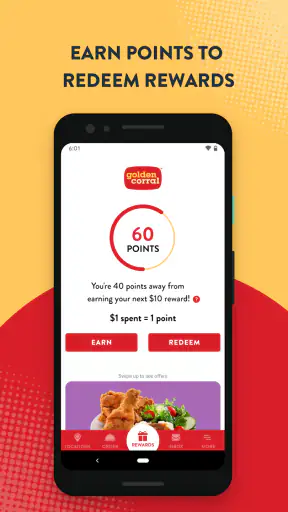
Rewards are another reason to open the app even when I am not ready to order immediately. For a returning customer, keeping ordering and rewards in the same place is more convenient than relying on memory or separate notes. I would still check that the account is signed in correctly before placing an order, because a reward-related benefit is only useful if the app recognizes the right customer context.
Motor and sensory considerations
From a motor perspective, the app is most comfortable when I can use both hands and take my time. Ordering food involves tapping menu choices, adjusting selections, reviewing a cart, and completing a final action. Someone with limited dexterity may find repeated small taps tiring, particularly during a group order. In that situation, a shorter order or assistance from another person may be more comfortable than trying to complete everything quickly.
Voice control and system-level accessibility tools may help some users interact with the phone, but I would not treat those tools as a guarantee that every app control will respond perfectly. The practical approach is to test the flow with a small order first. If a person depends on voice input, switch access, or another assistive method, confirming that the key actions can be reached before building a large cart can prevent frustration.
For sensory needs, the app’s restaurant-specific focus is helpful because it avoids the constant stream of unrelated content found in many marketplace apps. There are fewer reasons to jump between restaurants or promotional categories. Even so, food ordering can still involve visual menus, changing screens, and confirmation steps. Someone sensitive to visual clutter may benefit from lowering screen brightness, using a calmer phone setting, or preparing the order away from a noisy environment.
Users who need to inspect ingredients, portion information, or customization details should read the available item information carefully and avoid assuming that a familiar dish always has the same options in every location. The app can make ordering more convenient, but convenience should not replace personal checking when dietary restrictions or allergies are involved. If a detail is essential to safety, contacting the restaurant directly is the more responsible step.
Situational access: where the app earns its place
The clearest everyday use case is a busy evening at home. I can imagine finishing work, realizing that several people need dinner, and using the app to organize a pickup order rather than coordinating separate phone calls. The value is not just speed. A written cart gives me something concrete to review, which is easier than remembering a series of spoken requests.
Delivery is particularly useful when leaving home is difficult. That may include looking after a sleeping child, supporting an older family member, dealing with temporary illness, or simply managing a day when travel is not practical. The app’s delivery option gives those situations a direct route to the restaurant. I would still plan with some flexibility, because a digital order does not eliminate the need to be available when the meal arrives.
Pickup suits a different kind of access need. Someone who finds waiting in a busy restaurant uncomfortable may prefer arranging the order in advance and making a shorter visit. It can also help a customer who has limited energy: the planning happens on the phone, while the physical part is reduced to getting the meal. Whether that works well depends on the specific location and the person’s ability to reach it.
The app can also be useful for a customer who does not feel comfortable making phone calls. Written menus and on-screen selections reduce the need to explain an order verbally. That does not mean every possible request will be handled through the app, but for standard ordering it can make the process feel more private and controlled.
For families, I see another advantage in being able to review the order before submission. A parent or caregiver can take responsibility for the final check instead of asking a child or another family member to communicate every detail at the counter. This is a modest but meaningful form of practical access: the app supports shared planning without requiring everyone to use it in the same way.
How it compares with the usual alternatives
Compared with placing an order by phone, the app gives me a visual record of the choices and reduces the risk of mishearing a request. Phone ordering can still be better for unusual questions, complicated dietary concerns, or situations where a person cannot comfortably navigate a touchscreen. The app is strongest for standard orders that I can inspect independently.
Compared with a general delivery service, the Golden Corral app is more focused on this particular restaurant. That can make the experience feel less distracting, and rewards are connected to the restaurant rather than spread across a larger marketplace. A general service may be better when I want to compare several restaurants, combine different cuisines, or use one account for many local businesses.
Compared with ordering at the restaurant, the app lets me prepare from a quieter place and review the cart before I travel. In-person ordering remains preferable for someone who needs immediate human clarification or finds the physical restaurant easier than a phone interface. Neither method is universally superior; the right choice depends on whether the main barrier is travel, conversation, screen interaction, or uncertainty about the meal.
Remaining barriers I noticed
The app’s focused design also creates limits. It is most useful when I already want Golden Corral. If I am deciding between restaurants, looking for a particular dietary style, or comparing delivery services, I would rather begin with a broader platform. This is not a flaw in the restaurant app so much as a boundary around what it is designed to do.
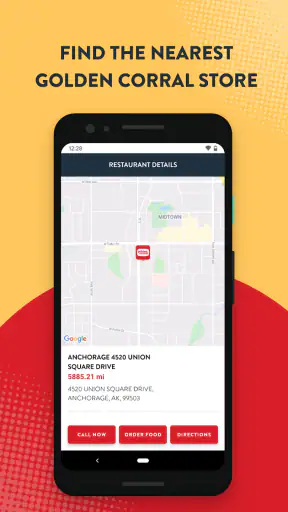
Location matters throughout the experience. A customer should select the intended restaurant carefully and verify the cart before paying attention to convenience. A nearby branch may not be the branch that serves a particular address, and the available ordering path can vary by location. I would not assume that seeing a familiar item means it will be offered in exactly the same form everywhere.
There is also a human cost to digital ordering when something goes wrong. A wrong customization, an unavailable item, or a delivery problem may require follow-up beyond the app. People who need direct reassurance may find a phone conversation or in-person visit more effective. I consider this an important accessibility point: an app can reduce barriers for some users while adding a new layer for anyone who needs immediate personal assistance.
The current version is 1.5, and it runs on devices using operating system version 10 or later. That makes checking device compatibility worthwhile before planning around the app. Someone using an older phone may need another ordering method, and upgrading a device is not a reasonable expectation for a simple meal. This is one reason I would keep phone or in-person ordering in mind as a backup.
Another limitation is the physical world around the order. A digital pickup does not guarantee an accessible parking space, a quiet entrance, seating, or an easy path through the restaurant. Delivery removes the trip but may still require someone to answer the door and handle the food. I appreciate the app most when I view it as one part of an access plan, not as a promise that every step after checkout will be effortless.
Who should use it, and who may prefer another option
I would recommend it to regular Golden Corral customers who want delivery or pickup without a long phone conversation. It is also a good fit for families coordinating one order, customers who like checking a written cart, and people who value having rewards connected to their restaurant visits. The free price removes an obvious barrier to trying it, so a customer can test the workflow without committing money to the app itself.
I would be more cautious about recommending it as the only option for someone with strict allergy concerns, complex customization needs, limited touchscreen control, or an older unsupported device. Those users may be better served by contacting the restaurant, asking a trusted person to assist, or using a broader service if it offers a clearer ordering path. The app should make a suitable order easier, not pressure anyone into a method that feels unsafe or inaccessible.
Because it is from Golden Corral Corporation rather than an independent marketplace, the app makes the most sense when loyalty to this restaurant is already part of the decision. If I want discovery, price comparison across restaurants, or a single place to manage many food providers, another app will likely be more flexible. If I want Golden Corral specifically, the dedicated experience is cleaner.
My inclusive verdict
After using it as a restaurant-ordering tool, I see Golden Corral as a practical and reasonably approachable option for delivery, pickup, and rewards. Its strongest quality is focus: it gives me a direct way to arrange a Golden Corral meal without the extra clutter of a general marketplace. That focus can support different abilities and situations, particularly when reading and reviewing a written order is easier than handling a phone conversation or a busy restaurant visit.
It is not a complete answer to every access need. Users may still face small controls, location-specific choices, device requirements, physical pickup barriers, or the need to contact staff for important questions. My best advice is to use the app deliberately: select the correct location, build the cart in stages, inspect the final order, and choose delivery or pickup based on the person’s actual energy, mobility, sensory comfort, and need for assistance.
The app is at its best when convenience and control matter more than restaurant comparison. For that audience, the free Golden Corral app is worth trying. I would keep an alternative ordering method available for unusual requests or accessibility situations that the digital flow cannot comfortably handle. That balanced approach lets the app do what it does well while avoiding the assumption that one ordering channel can suit everyone.


